
Divine Fortune is not just a simple digital slot experience—it is a mythologically driven game universe inspired by ancient Greek legends, gods, and symbolic storytelling. The entire structure of the game is built around the idea of exploring the divine realm, where fortune is controlled by powerful mythic forces such as Medusa, Pegasus, and the gods of Olympus.
Unlike traditional casino-style mechanics that focus purely on repetition and chance, Divine Fortune integrates narrative depth into its gameplay loop. This creates a more immersive experience where players feel as if they are progressing through a mythological journey rather than simply spinning reels.
In modern online gaming ecosystems—especially platforms like Rummy Modern, where users engage with a variety of interactive experiences—Divine Fortune stands out due to its cinematic design, symbolic richness, and reward architecture.
Login Bonus, No Deposit Bonus Codes, Sign Up Bonus, Free Chips, VIP Program, Bonus Offers, Welcome Bonus, Promo Codes, Free Spins, Bonus Code, Cashback bonus, Bonus Funds, Welcome Offer, Bonus Code for Existing Players, Promotions, Coupons, Sign up, APK, Slots, Games, Links Rummy Modern Divine Fortune — are commonly used promotional and access-related elements in modern gaming ecosystems that support user onboarding, retention, and engagement. These mechanisms are often integrated into platforms to encourage initial registration, reward returning players, and provide structured incentive systems that enhance long-term participation.
The game appeals strongly to mobile-first users in India due to its lightweight structure, fast load times, and compatibility with modern web-based gaming environments.
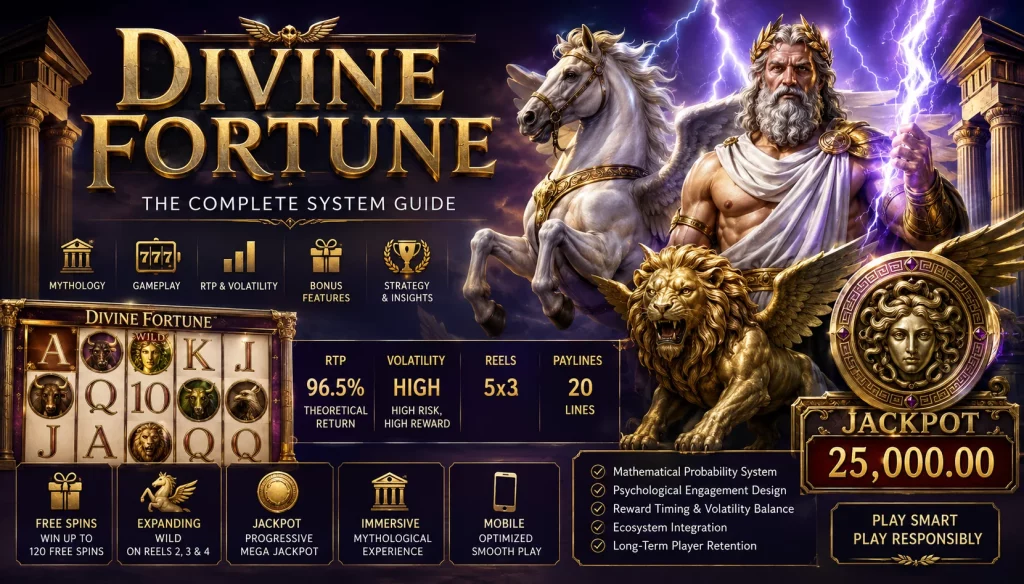
Mythological Theme & Symbolic Structure
The entire game design is built on three conceptual pillars:
1. Divine Power System
The gods are not just background elements—they actively influence outcomes through symbolic triggers and bonus mechanics.
2. Creature-Based Rewards
Mythical creatures such as Pegasus act as high-value symbols that unlock enhanced payouts and bonus layers.
3. Temple of Fortune Mechanic
The game environment resembles an ancient temple where hidden rewards are unlocked through progression.
These layers create a sense of discovery, making each spin feel like part of a larger unfolding story.
Gameplay Philosophy
Divine Fortune follows a design philosophy centered around:
- Risk and reward balance
- Long-session engagement
- Progressive anticipation
- Visual storytelling
Unlike fast casual arcade titles, the game encourages patience and observation. Players who understand pattern flow and volatility cycles often achieve better long-term results.
Core Mechanics Overview
At its foundation, Divine Fortune uses a structured reel-based system:
- 5 vertical reels
- Multiple paylines
- Expanding symbols
- Scatter-triggered bonus rounds
However, the deeper complexity lies in how these systems interact dynamically during gameplay.
For example:
- A scatter symbol may trigger free spins
- Free spins may introduce expanding wilds
- Expanding wilds may unlock jackpot pathways
This layered interaction is what gives the game its depth.
Player Engagement Cycle
The engagement cycle in Divine Fortune can be broken down into four phases:
Phase 1 – Entry & Exploration
Players familiarize themselves with symbols and basic mechanics.
Phase 2 – Pattern Recognition
Users begin noticing symbol behavior and trigger frequency.
Phase 3 – Bonus Activation
Free spins and reward rounds begin appearing.
Phase 4 – High Reward Potential
Jackpot sequences and rare symbol chains occur.
Each phase builds emotional anticipation, which is a key driver of retention.
Symbol Hierarchy System
Symbols in Divine Fortune are not equal; they are structured into tiers:
- Low-tier symbols (basic mythological icons)
- Mid-tier symbols (gods and creatures)
- High-tier symbols (rare divine artifacts and jackpot triggers)
This hierarchy ensures that every spin has a potential escalation path.
Game Structure Breakdown
| System Component | Function | Player Effect |
|---|---|---|
| Reel Engine | Controls symbol rotation system | Determines base outcomes |
| Symbol Layers | Organizes mythological icons by rarity | Creates reward hierarchy |
| Bonus Engine | Activates special rounds | Increases winning potential |
| Myth System | Links symbols to Greek mythology | Enhances immersion |
User Experience Design
The interface of Divine Fortune is carefully optimized for emotional engagement. The use of gold accents, temple-inspired backgrounds, and animated symbols creates a sense of sacred discovery.
Key UX elements include:
- Smooth reel animation
- Responsive touch controls
- High-contrast symbol design
- Ambient mythological sound design
These elements ensure that the game feels alive rather than static.
Early Game Strategy Insight
In early gameplay, the focus should not be on high-risk attempts. Instead, players benefit more from:
- Understanding symbol frequency
- Observing bonus triggers
- Managing session duration
This foundational understanding improves long-term performance significantly.
Platform Integration Context
Within broader gaming ecosystems like Rummy Modern, Divine Fortune acts as a bridge between casual entertainment and strategic gameplay environments. It complements other formats such as card-based systems and competitive reward structures.
This hybrid positioning makes it appealing for users who enjoy both skill-based and chance-based mechanics.
Psychological Engagement Factors
The game is designed using several behavioral engagement principles:
- Variable reward schedules
- Near-win illusions
- Progressive unlocking systems
- Sensory feedback loops
These factors contribute to high retention rates and repeated user engagement.
The Logic Behind Rewards in Divine Fortune
The bonus system in Divine Fortune is where the game truly transforms from a standard reel-based experience into a layered reward ecosystem. Instead of treating wins as isolated events, the game builds them into a progressive structure where each feature can activate another.
At the core of this system lies a carefully balanced probability engine. Every spin contributes to hidden progression variables that determine whether the player is approaching a reward state or remaining in base gameplay.
This creates a psychological effect known as “building anticipation pressure”—the feeling that something significant is about to happen, even during regular spins.
In many modern gaming platforms, especially mobile-first ecosystems, this structure is what keeps users engaged longer than traditional static casino-style formats.
Free Spins Architecture & Internal Flow
Free spins in Divine Fortune are not just a reward—they are a separate gameplay layer with modified mechanics.
During this phase:
- Certain symbols gain expanded behavior
- Wild symbols become more active
- Win multipliers may increase dynamically
What makes this system interesting is that free spins are not fixed in outcome value. Instead, they scale based on how they were triggered, meaning two players entering free spins may experience entirely different reward trajectories.
This variability is a key reason why the game maintains long-term engagement across repeated sessions.
Jackpot Layer System
Divine Fortune uses a multi-tier jackpot structure:
- Minor Reward Tier
- Mid Reward Tier
- High Reward Tier
- Progressive Grand Jackpot Tier
Each tier is not simply a higher payout—it is a different probability class. The higher the tier, the more complex the trigger sequence required.
This layered structure ensures that even small sessions feel meaningful, while long sessions carry exponential reward potential.
Slot Dynamics & Symbol Behavior
The behavior of symbols is not static. Certain conditions alter how symbols interact:
- Wild symbols expand across reels
- Scatter symbols trigger bonus states
- Mythical creatures activate chain reactions
This dynamic system creates what can be described as “living reels”—where outcomes feel reactive rather than pre-determined.
The result is a gameplay loop that feels less mechanical and more interactive.
Bonus System Deep Structure
| System Layer | Trigger Condition | Outcome Behavior |
|---|---|---|
| Base Spin Layer | Standard reel alignment | Normal symbol payouts |
| Free Spin Layer | Scatter activation | Enhanced multiplier logic |
| Bonus Chain Layer | Repeated symbol triggers | Extended reward sequences |
| Jackpot Layer | Rare multi-symbol alignment | Progressive payout activation |
Player Behavior in Bonus Cycles
During bonus cycles, player behavior typically shifts from fast spinning to observation-based engagement. Instead of focusing on immediate outcomes, players begin tracking:
- Symbol repetition patterns
- Bonus trigger frequency
- Session momentum changes
This shift in behavior is intentional from a design perspective, as it increases session duration and emotional investment.
Bonus Activation Probability Over Session Time
Reward Psychology Layer
The system also uses reinforcement loops:
- Small wins maintain engagement
- Near-misses increase emotional tension
- Delayed rewards enhance perceived value
This combination is what makes the experience feel “dynamic” rather than static.
Transition to Next Phase
At this stage of understanding Divine Fortune, players begin to recognize that the game is not only about chance but about timing, session structure, and probability flow.
In the next part, we will explore deeper technical behavior, including RTP structure, volatility mapping, and system-level performance analysis.
Understanding the Mathematical Core of Divine Fortune
At this stage, Divine Fortune stops being just a visual entertainment system and becomes a structured probability model disguised as a game. Every outcome in the game is governed by two fundamental parameters: Return to Player (RTP) and volatility. These two metrics define how value flows through the system over time, and they are responsible for shaping the entire player experience from a mathematical perspective.
RTP in Divine Fortune represents the theoretical long-term return percentage distributed across all gameplay sessions. It does not describe individual results but rather the aggregate behavior of millions of spins. In practice, this means that while short sessions may feel unpredictable, the system is statistically stabilized over extended periods.
Volatility, on the other hand, determines how that RTP is delivered. Instead of distributing rewards evenly, the system concentrates value into clusters. This creates long stretches of minimal activity followed by sudden spikes of high-value outcomes. The emotional effect of this structure is significant because it creates contrast between silence and reward intensity.
System-Level Behavior and Hidden Variance
The deeper layer of Divine Fortune’s system lies in its variance engine. This engine controls how frequently reward states are allowed to manifest. Unlike simple random generators, this system applies weighted probability states that shift dynamically depending on session progression.
As a result, two players spinning at the same moment may not be operating under identical probability conditions. The system continuously recalibrates based on internal session metrics such as spin frequency, inactivity gaps, and symbol distribution trends.
This is why the game often feels “alive” or reactive rather than purely mechanical.
Mobile Optimization and Platform Adaptation
From a technical perspective, Divine Fortune is optimized for mobile-first environments, particularly in regions with high Android usage. The system dynamically adjusts animation quality, memory usage, and asset loading depending on device performance.
This ensures that even low-end devices can maintain stable gameplay without losing core mechanics. The adaptation layer does not affect RTP or volatility but ensures consistent user experience across hardware tiers.
RTP Flow Visualization Concept
To better understand how RTP behaves over time, it is important to imagine it not as a flat percentage but as a flowing curve that stabilizes only after long interaction cycles. Early gameplay often deviates significantly from theoretical RTP, while long-term sessions gradually converge toward it.
This creates a natural illusion of imbalance in short-term play, even though the system remains statistically consistent.
RTP & Volatility System Mapping
| System Parameter | Mathematical Role | Player Impact |
|---|---|---|
| RTP (96.5%) | Long-term return distribution model | Defines expected return over extended play |
| Volatility (High) | Variance concentration system | Creates rare but high-value wins |
| Hit Frequency | Probability of win occurrence | Controls rhythm of gameplay |
| Variance Engine | Dynamic probability adjustment system | Creates unpredictable reward clusters |
Emotional Structure of Volatility
High volatility is not just a mathematical concept; it is also an emotional design tool. In Divine Fortune, the absence of constant rewards is intentional because it increases the psychological value of each win. The longer the silence between rewards, the stronger the emotional reaction when a win finally occurs.
This structure is carefully balanced so that frustration does not dominate the experience, but anticipation remains active throughout gameplay.
RTP Convergence Over Time
RTP Growth by Spins (With Proper Scale)
System Perspective on Player Interaction
From a backend perspective, every player session is treated as an independent probability environment. The system does not “remember” outcomes in a deterministic way, but it does track session intensity to maintain balance in reward distribution.
This ensures that long inactive periods, rapid spin sequences, and bonus triggers all contribute differently to probability shaping without violating fairness constraints.
At this point, Divine Fortune can be understood as a layered probability architecture wrapped in mythological design. It is not only about visuals or theme but about structured mathematical behavior designed to create controlled unpredictability.
In the final part, we will analyze long-term engagement systems, monetization structure, and ecosystem integration within modern gaming platforms.
Player Lifecycle Design
A typical player journey in Divine Fortune is structured around gradual emotional and behavioral adaptation. Early sessions are focused on exploration and curiosity, while later sessions shift toward optimization and reward chasing behavior.
Over time, players develop an intuitive understanding of how the system behaves, even without knowing the underlying mathematics. This perceived mastery is a key driver of long-term engagement.
The lifecycle does not end with a “win” or “loss”—it loops back into re-engagement cycles through daily bonuses, seasonal content, and progressive reward systems.
Monetization Structure and Economic Flow
The monetization model of Divine Fortune is built around optional engagement rather than forced interaction. Players are not required to spend, but the system is designed in a way that encourages micro-decisions that gradually increase investment over time.
Instead of relying on single large purchases, the system focuses on small incremental value exchanges. This includes cosmetic progression, extended gameplay access, and bonus-enhanced sessions.
The key design principle is psychological accessibility—players feel in control of spending decisions while still being encouraged to enhance their experience.
Ecosystem Integration
Within broader gaming platforms such as Rummy Modern, Divine Fortune operates as part of a multi-game environment. This means that player progression, rewards, and engagement signals can be partially shared across different game formats.
This ecosystem structure increases retention because players are not tied to a single game loop. Instead, they move between interconnected experiences, each reinforcing the other.
For example:
- Slot engagement can unlock platform-level rewards
- Cross-game bonuses can extend session duration
- Seasonal events can span multiple game types
This interconnected structure is what transforms individual games into a unified entertainment platform.
Retention Engineering
Retention in Divine Fortune is not accidental—it is structurally engineered. The system uses time-based incentives, unpredictability cycles, and reward layering to maintain consistent user return behavior.
Instead of relying on constant rewards, the system alternates between low-activity and high-reward phases. This fluctuation keeps engagement psychologically active, as players return to “check” if they are entering a high-reward phase.
This creates what can be described as a return loop mechanism—users re-enter the system not only for rewards but for expectation validation.
Ecosystem & Monetization Structure
| System Layer | Function | Player Impact |
|---|---|---|
| Daily Reward System | Time-based login incentives | Encourages consistent return behavior |
| Micro-Transaction Layer | Optional in-game purchases | Enhances progression speed |
| Seasonal Events | Time-limited reward cycles | Creates urgency and engagement spikes |
| Cross-Game Ecosystem | Shared reward infrastructure | Increases platform retention |
Behavioral Retention Curve
The retention system is designed around fluctuating engagement rather than linear growth. Instead of continuously increasing activity, the system creates cycles of:
- Engagement peaks
- Cooling-off periods
- Re-engagement spikes
Divine Fortune is best understood as a structured digital game system rather than just a simple slot-style experience. It combines probability-based mechanics, reward design, and platform-level integration to create consistent user engagement over time.
From a technical perspective, the game uses mathematical probability to determine outcomes, while also layering different reward features that influence how often and how intensely players experience wins or bonus events. This creates variation in gameplay without making it fully predictable.
At the same time, the experience is designed to support long-term engagement. The pacing of rewards, visual feedback, and bonus features are all arranged in a way that keeps the player interested across multiple sessions, rather than delivering everything at once.
Because of this combination of systems, Divine Fortune remains relevant on modern mobile gaming platforms. It works well in mobile-first markets by balancing short gameplay sessions with long-term progression elements, making it suitable for users who prefer flexible, on-the-go entertainment.
FAQ
Divine Fortune – FAQ
What is Divine Fortune and how does it actually work?
Divine Fortune is a digital slot-style game built around Greek mythology. It uses a random number generation system combined with structured reward mechanics like bonuses, scatters, and jackpot layers. Each spin is independent, but the system includes layered probabilities that create variation and unpredictability in outcomes.
Is Divine Fortune based on skill or luck?
The game is based on luck. Every spin is generated randomly, and no strategy can guarantee results. Player perception of patterns is psychological rather than mathematical reality.
Why do bonuses and free spins feel unpredictable?
Bonus triggers are controlled by multiple hidden probability conditions rather than fixed intervals. This makes activation timing irregular and unpredictable.
What is RTP and why does it matter?
RTP is a long-term statistical value showing average return over millions of spins. It does not affect individual short sessions.
Why does gameplay sometimes feel inactive?
High volatility creates long low-reward periods followed by rare high-value events. This is intentional system design.
Can jackpots be predicted?
No. Jackpot outcomes are fully random and independent. There are no predictive patterns.
Why do players keep returning to the game?
The system uses anticipation cycles and reward unpredictability, which naturally encourage repeat engagement.
Is Divine Fortune connected to other games?
In some platforms it is part of a larger ecosystem, but its core mechanics remain independent and probability-based.






Comments